Treatment Science · Anagen

Topical T3 for the Scalp

The thyroid hormone your hair follicle already makes — delivered where it’s needed, not swallowed.

Read this first

This is an early, honest dataset: a small uncontrolled observational study in people, plus ex-vivo human-scalp laboratory work. It is not a randomized controlled trial. We show the caveats next to the numbers.


Key termDeiodinases (DIO2 / DIO3). Enzymes that activate and inactivate thyroid hormone inside the follicle — letting it tune its own T3 exposure independent of blood levels.
Key termAnagen. The active growth phase of the hair cycle. T3 prolongs it and supports hair-matrix biology.
CaveatThe THRB1 → PGC-1α → ERRα mitochondrial circuit is inferred from liver and cell-line work; it has not been demonstrated in the hair follicle itself.
01 The follicle’s thyroid axis

The follicle runs a local thyroid system of its own.

The human hair follicle is not just a passive target for thyroid hormone arriving from the bloodstream. Organ-cultured human scalp follicles express thyroid-hormone receptors, and they transcribe the deiodinase enzymes (DIO2 and DIO3) that activate and inactivate thyroid hormone right inside the follicle. In other words, the follicle can tune its own T3 exposure independent of circulating levels.

Key term · DeiodinasesDIO2 and DIO3 activate and inactivate thyroid hormone inside the follicle, letting it tune its own T3 exposure independent of blood levels.

What T3 does there, mechanistically:

  • 1Prolongs anagen — the active growth phase — and supports hair-matrix biology.
  • 2Drives intrafollicular mitochondrial biogenesis and ATP production — the energy supply anagen runs on.
  • 3By analogy to liver and cell-line work, this likely reflects a generalizable THRB1 → PGC-1α → ERRα circuit that governs mitochondrial turnover — a mechanism not yet demonstrated in the hair follicle itself.
Why a topical is rational

Deliver T3 to the follicle’s own thyroid machinery without flooding the body. An early in-vivo study found topical T3, delivered in liposomes, stimulated hair growth in mice and rats.


MethodOrgan-cultured human scalp skin from five donors, treated with topical T3, T4 and their combination across two candidate vehicles, read out by quantitative immunohistomorphometry across fourteen hair-biology markers.
VehiclesTwo candidate vehicles built from well-characterized, widely-used cosmetic / topical excipient ingredients.
We’re not hiding thisOn the crude ex-vivo hair-shaft-elongation metric, T3 alone did not outperform vehicle (T4 did). The ex-vivo case for T3 is mechanism-and-safety, not direct growth.
02 Why T3, not T4

The picture is more interesting than “thyroid hormone grows hair.”

Working with Cutaneon and Prof. Ralf Paus (University of Miami), we treated organ-cultured human scalp skin from five donors with topical T3, T4, and their combination — across two candidate vehicles built from well-characterized, widely-used cosmetic / topical excipient ingredients — then read out fourteen hair-biology markers by quantitative immunohistomorphometry.

  • 1Anagen, held longer (directional). T3 (10 nM) and T4 (10 µM) each trended toward prolonging anagen across three donors — not statistically significant (n = 20–35 follicles/3 donors), but the first time the signal has been reproduced after topical rather than culture-medium application.
  • 2FGF-7/KGF, a hair-growth promoter, rose. Topical T3 and T4 increased FGF-7 in outer-root-sheath keratinocytes — significantly in one of the two vehicles (p < 0.001 for T3 1 nM; three donors) and as a non-significant trend in the other.
  • 3The melanocyte system responded, tolerably. T3 tended toward stronger gp100 immunoreactivity and longer melanocyte dendrites, with no abnormal melanin clumping and no markers of follicle damage. Effects on melanin itself were vehicle- and dose-dependent and inconsistent, so we make no pigmentation claim — we read this as a tolerability signal, not an anti-greying one.
  • 4A T3-favorable metabolic profile. T3 tended to lower phospho-S6 (mTORC1 activity) and mitochondrial MTCO1 — a pattern associated with follicle “rejuvenation” rather than over-drive — whereas T4 and the combination tended the other way.
  • 5The case against T4 and the combination. T4 and the combination looked worse on several markers — lower hair-matrix proliferation, and (depending on the vehicle) higher TGFβ-2 or lower hair-shaft keratin K85 — arguments against topical T4 and against combining T3 with T4.
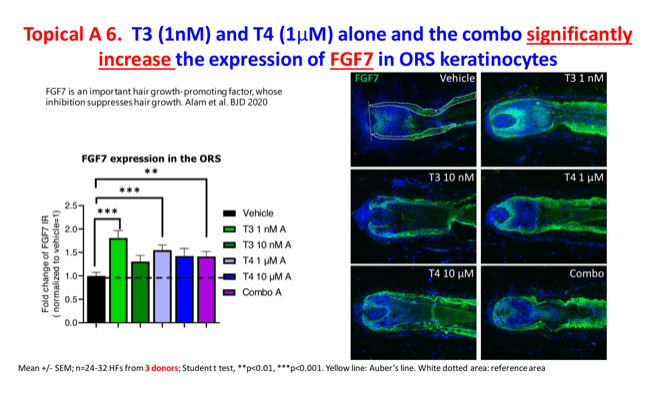
Plate 02FGF-7 / KGF induction in ORS keratinocytes
Topical T3 (1 nM) and T4 (1 µM) alone and the combination significantly increase FGF7 expression in outer-root-sheath keratinocytes. Bar chart of fold-change of FGF7 immunoreactivity normalized to vehicle, with vehicle ~1.0, T3 1 nM ~1.8, T3 10 nM ~1.3, T4 1 µM ~1.55, T4 10 µM ~1.4 and the combination ~1.4; significance markers from triple-asterisk to double-asterisk. Immunofluorescence micrographs of hair follicles for vehicle, T3 1 nM, T3 10 nM, T4 1 µM, T4 10 µM and the combination show FGF7 in green.
Plate 02. FGF-7/KGF — an important hair-growth-promoting factor (Alam et al. BJD 2020) — rose with topical T3 and T4 in outer-root-sheath keratinocytes; significant for T3 1 nM (p < 0.001). Mean ± SEM; n = 24–32 hair follicles from 3 donors; Student t-test (**p < 0.01, ***p < 0.001). Yellow line: Auber’s line; white dotted area: reference area.
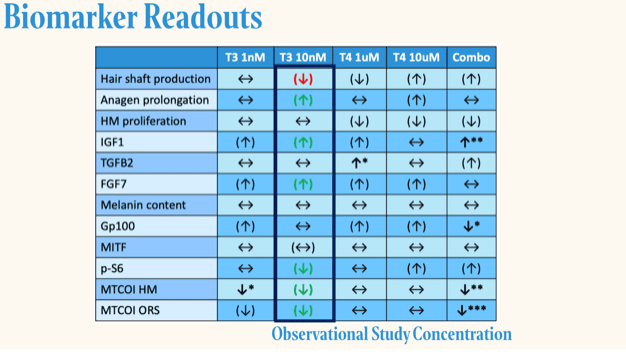
Plate 02bConsolidated ex-vivo biomarker readouts (1 of 2)
Biomarker readouts table across T3 1 nM, T3 10 nM, T4 1 µM, T4 10 µM and the combination, for hair-shaft production, anagen prolongation, hair-matrix proliferation, IGF1, TGFB2, FGF7, melanin content, Gp100, MITF, p-S6, MTCOI in hair matrix and MTCOI in ORS. T3 10 nM (the observational-study concentration) is highlighted: anagen prolongation up, FGF7 up, IGF1 up, p-S6 down, MTCOI down in both hair matrix and ORS, hair-shaft production down.
Plate 02b. Quantitative immunohistomorphometry across the ex-vivo panel. The boxed column is the T3 10 nM observational-study concentration. T3 tended to lower phospho-S6 (mTORC1) and mitochondrial MTCO1 — a follicle “rejuvenation” pattern — while raising FGF7 and IGF1; arrows in green/red mark the favorable and unfavorable moves.
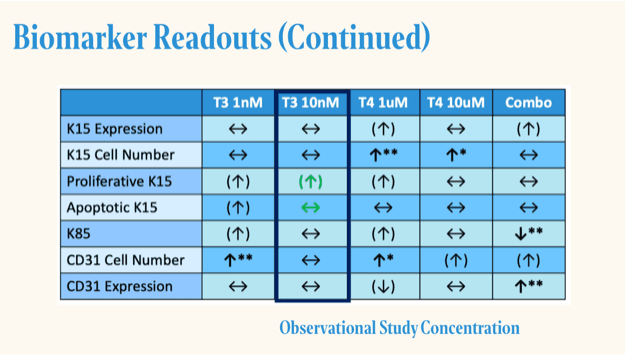
Plate 02cConsolidated ex-vivo biomarker readouts (2 of 2)
Continued biomarker readouts table across T3 1 nM, T3 10 nM, T4 1 µM, T4 10 µM and the combination, for K15 expression, K15 cell number, proliferative K15, apoptotic K15, K85, CD31 cell number and CD31 expression. T3 10 nM column highlighted; the combination shows K85 down and CD31 expression up.
Plate 02c. Keratin (K15, K85) and vascular (CD31) markers. T4 and the combination looked worse on several markers (e.g. K85 down for the combination), an argument against topical T4 and against combining T3 with T4. HairDAO / Cutaneon, Paus laboratory.
Why we still took T3 into people

The ex-vivo case for T3 is a mechanism-and-safety case — favorable anagen, growth-factor, pigmentary and metabolic signals with a clean tolerability profile — which is why we took T3 (the 10 nM-class dose) into people, where the outcome that matters is measured directly. This dataset is published as a peer-reviewed pilot: Gherardini et al., Clinical & Experimental Dermatology, 2025.


For scale onlyThe topical finasteride 0.25% Phase III reported +13.5 placebo-subtracted hairs at 24 weeks (Piraccini 2022). Different metric, placebo-controlled vs our uncontrolled — not directly comparable.
Confound · microneedlingPatient 1 added microneedling mid-study. Microneedling grows hair on its own, so his +162 is not a pure T3 effect.
Confound · seasonalityThe study ran Feb–Aug, into summer, when scalp density tends to rise and shedding tends to fall.
03 The six-patient study

Six patients, six months, tracked by trichoscopy.

Six patients used topical T3 and were tracked with trichoscopy (density and caliber) over six months. The signal here is density, not individual hair thickness.
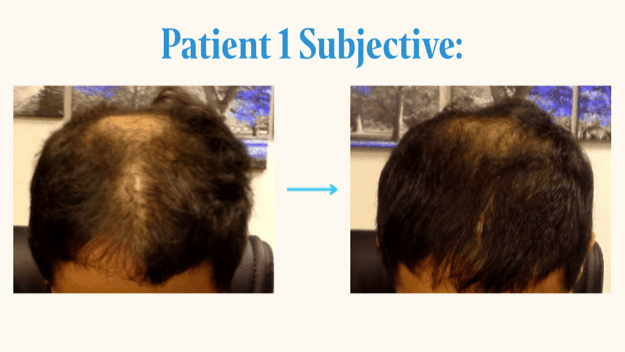
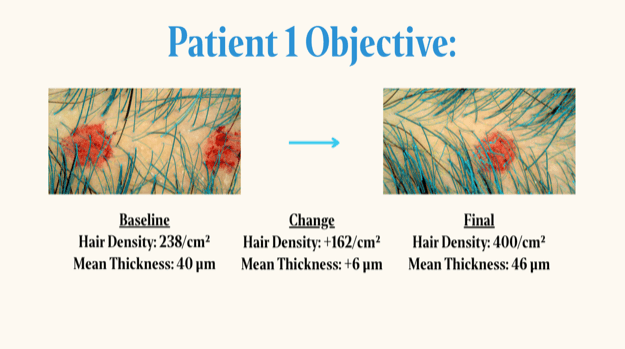
Plate 03Patient 1 · subjective (crown, before → 6 months)
Patient 1 crown photographs before and after six months of topical T3, showing visibly increased coverage and density at the crown and frontal scalp.
Plate 03. Patient 1, crown before and after six months of topical T3. Note: this patient also added microneedling during the study — see caveats below — so his result should not be read as a pure T3 effect.
Plate 03bPatient 1 · objective (trichoscopy)
Patient 1 trichoscopy, baseline versus final. Hair density 238 per square centimeter at baseline rising to 400 (a change of plus 162), and mean hair thickness 40 µm rising to 46 µm (a change of plus 6 µm).
Plate 03b. Patient 1, trichoscopy: follicle density 238 → 400 follicles/cm² (+162) and mean caliber 40 → 46 µm. The single largest gain in the study — and the one most confounded (microneedling).
Median gain +21.5 · mean +42.5 follicles/cm² (n = 6)

With Patient 1 (who added microneedling) set aside, the mean falls to +18.6 follicles/cm² while the median (+14) is little changed. Caliber was flat-to-down across the cohort (mean −1.33 µm): the signal here is density, not individual hair thickness.

The honest read on this study — please weigh it:

  • 1No placebo / control arm. This is observational, n = 6.
  • 2Seasonality. The study ran February through August, heading into summer, when scalp hair density tends to rise and shedding tends to fall. Some of the gain may be seasonal rather than treatment-driven.
  • 3Patient 1 added microneedling during the study. Microneedling grows hair on its own, so his standout +162 should not be read as a pure T3 effect; with him set aside, the mean falls to +18.6 follicles/cm² while the median (+14) is little changed.
  • 4Three of six used other hair products — but each had been on them for more than six months before the study window (a stable baseline), with the exception of the microneedling noted above.
  • 5Caliber was flat-to-down (mean −1.33 µm): the signal here is density, not individual hair thickness.
For scale only — not a head-to-head

The Phase III trial of topical finasteride 0.25% reported a +20.2 hair increase in target-area hair count at 24 weeks, versus +6.7 for placebo — a placebo-subtracted gain of +13.5 hairs (Piraccini et al. 2022). Topical T3’s median (+21.5) and mean (+42.5 follicles/cm²) sit in a broadly similar range — but their trial is placebo-controlled while ours is uncontrolled, the two metrics differ (follicle density vs target-area hair count), and the mechanism is entirely different. They are not directly comparable.


Read honestlyTwo subjects, self-reported labs — directional reassurance, not a formal pharmacokinetic study.
The central questionDoes a topical thyroid hormone leak into the bloodstream and move your thyroid labs? In the subjects who checked, it didn’t move them meaningfully.
04 Systemic thyroid labs

Did it move systemic thyroid labs? An early n = 2 signal.

The central question for any topical thyroid hormone is simple: does it leak into the bloodstream and move your thyroid labs? In the subjects who checked, it didn’t move them meaningfully — small movements inside the normal interval, with no clinically meaningful systemic thyroid disruption.

Plate 04Serum thyroid panel · before → after (n = 2, self-reported)
SubjectFree T3 (pg/mL)Free T4 (ng/dL)TSH (µIU/mL)Read
Subject A3.7 → 4.21.31 → 1.231.02 → 1.80All within reference range
Subject B (~2 weeks)3.4 → 3.21.22 → 1.271.69 → 2.38All within range

Small movements inside the normal interval, with no clinically meaningful systemic thyroid disruption. Two subjects, self-reported labs — directional reassurance, not a formal pharmacokinetic study.

Plate 04. Serum free T3 / free T4 / TSH, before → after, in the two subjects who tested. Self-reported; n = 2; not a formal PK / skin-permeation study.

Consistent with ex-vivoThe ex-vivo tolerability data showed topical T3 caused no pigmentary abnormalities and no markers of follicle damage.
05 Safety

Across the six-patient study, no serious adverse events.

Five of six reported nothing; one noted “slight redness when applied, nothing long-term.” This is consistent with the ex-vivo tolerability data, where topical T3 caused no pigmentary abnormalities and no markers of follicle damage.
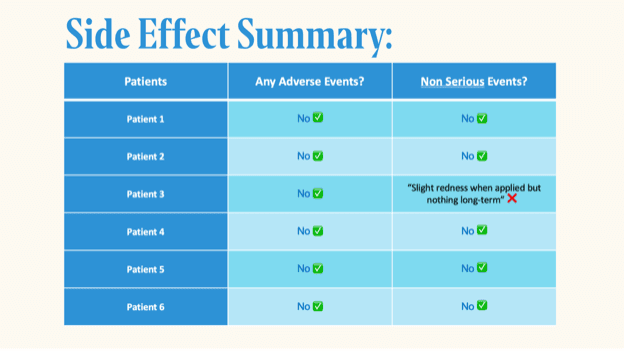
Plate 05Adverse-event summary · six-patient observational study
Side-effect summary table for six patients, with columns for any adverse events and non-serious events. Patients 1, 2, 4, 5 and 6 reported no adverse events and no non-serious events; Patient 3 reported no serious adverse events but noted slight redness when applied, nothing long-term.
Plate 05. Self-reported adverse events across the six-patient, six-month observational study. Zero serious adverse events; five of six reported nothing, and one noted “slight redness when applied, nothing long-term.”

Upstream signalTRH is the upstream signal in the same local thyroid axis (see the TRH page).
CaveatMechanistic transcriptomics, not a clinical endpoint.
06 T3 + TRH together

T3 pairs naturally with TRH.

In follicular units treated with T3 + TRH across a dose range, RNA-seq showed a clear separation from baseline by principal- component analysis, with hundreds of differentially expressed genes at each dose (532 at the low dose) — enriching pathways that map onto hair growth.

Those pathways include HIF-1 signaling (suppressed in androgenetic alopecia; its stimulators grow hair) and a broad energy-metabolism reprogramming (glycolysis/gluconeogenesis, fatty-acid metabolism, PPAR, AMPK). The anagen follicle is glycolytic and energy-hungry; the combination appears to push that program toward growth.
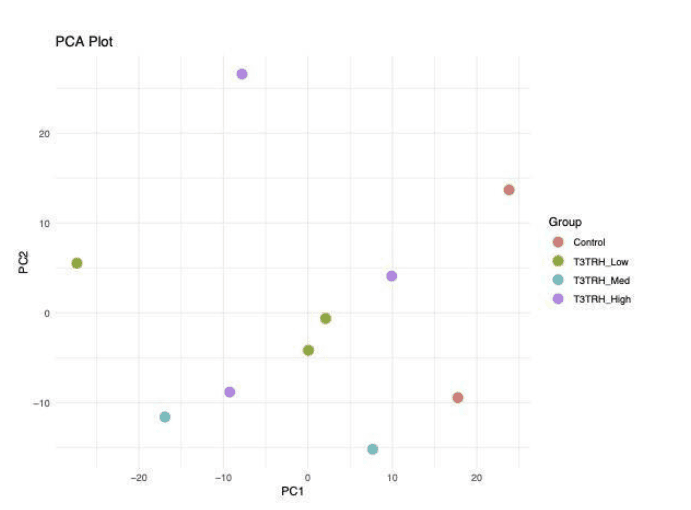
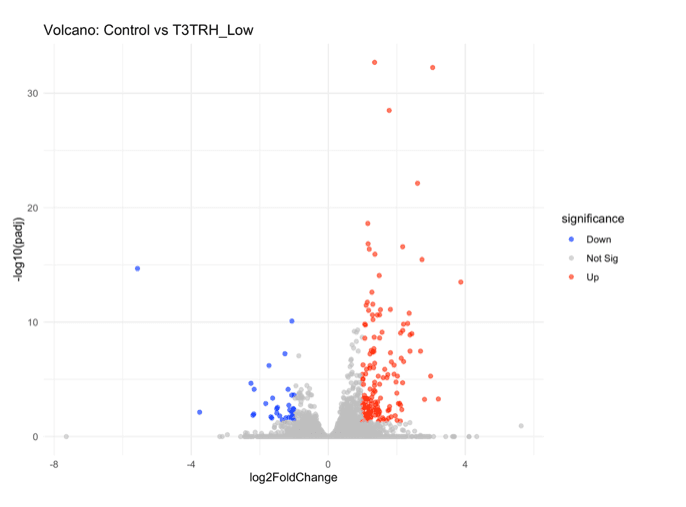
Plate 06Principal-component analysis · T3 + TRH dose-response
PCA plot of T3 plus TRH-treated human follicular units by group: Control, T3TRH_Low, T3TRH_Med and T3TRH_High, plotted on PC1 versus PC2. The control replicates sit apart from the treated doses, indicating treatment-driven separation.
Plate 06. T3 + TRH-treated human follicular units separate by treatment group on principal-component analysis, with the controls distinct from the treated doses.
Plate 06bDifferential expression · control vs low dose
Volcano plot, control versus T3TRH_Low, plotting log2 fold change on the x-axis against negative log10 adjusted p-value on the y-axis. Significantly up-regulated genes (red) outnumber down-regulated genes (blue), skewing toward upregulation; 532 genes are significantly changed.
Plate 06b. Control vs low dose: 532 significantly changed genes, skewed toward upregulation (x = log₂ fold change, y = −log₁₀ adjusted p).
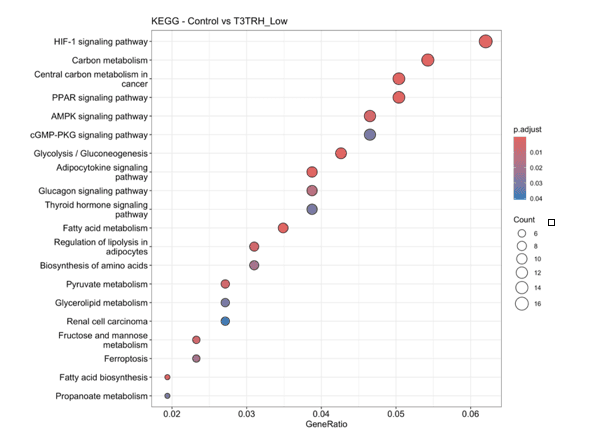
Plate 06cKEGG pathway enrichment · control vs low dose
KEGG pathway enrichment dot plot, control versus T3TRH_Low, ranked by gene ratio. Enriched pathways include HIF-1 signaling, carbon metabolism, central carbon metabolism in cancer, PPAR signaling, AMPK signaling, glycolysis/gluconeogenesis, thyroid hormone signaling, fatty-acid metabolism and ferroptosis; dot size encodes gene count and color encodes adjusted p-value.
Plate 06c. KEGG enrichment: HIF-1 signaling (suppressed in androgenetic alopecia; its stimulators grow hair), carbon/glucose metabolism (glycolysis–gluconeogenesis), PPAR, AMPK, fatty-acid metabolism, thyroid-hormone signaling and ferroptosis among the enriched pathways. The anagen follicle is glycolytic and energy-hungry; the combination appears to push that program toward growth.
Read honestly

Mechanistic transcriptomics, not a clinical endpoint. The RNA-seq describes which gene programs the combination moves — it does not measure hair regrowth in people.


07 The bottom line
01 · Mechanism

A local thyroid axis

The follicle makes and tunes its own T3 (DIO2/DIO3); peer-reviewed ex-vivo work behind the rationale.

Published · ex vivo
02 · Human signal

+21.5 median

Median +21.5 (mean +42.5) follicles/cm² over 6 months — small, uncontrolled, n = 6, with confounds.

Observed · n = 6
03 · Systemic

Labs in range

Serum T3 / T4 / TSH stayed within range in the 2 subjects who tested; self-reported, not a PK study.

Self-reported · n = 2
04 · Safety

0 of 6 serious AEs

One mild transient redness; consistent with ex-vivo tolerability (no damage, no pigmentary abnormalities).

Observed · n = 6

What remains unproven

  • No randomized controlled trial. The human data is a small, uncontrolled, n = 6 observational study, with the seasonality, microneedling and concurrent-treatment confounds spelled out in §03.
  • Density, not caliber. Mean shaft thickness was flat-to-slightly-negative.
  • Ex-vivo T3-alone did not increase hair-shaft elongation. The ex-vivo case for T3 is mechanistic and tolerability-based, not direct growth.
  • No formal human pharmacokinetic / skin-permeation study quantifying how much T3 reaches the follicle versus the circulation; the serum reassurance comes from two subjects.
  • Narrow therapeutic index. T3 (liothyronine) has a narrow therapeutic index systemically, with cardiac considerations; the local-only thesis is supported here but not formally proven across users.
Sources
  1. Internal data — HairDAO / Cutaneon: topical T3/T4 ex-vivo human-scalp organ culture, Formulations A and B, five donors (Paus laboratory, University of Miami; final report November 2023).
  2. Internal data — HairDAO: topical T3 six-patient, six-month observational study (trichoscopy density/caliber; serum thyroid panels). Uncontrolled; not an RCT.
  3. Internal data — HairDAO: T3 + TRH combination RNA-seq, follicular units (Azenta, poly-A, dose-response). Mechanistic transcriptomics, not a clinical endpoint.
  4. Published — Gherardini et al., topical T3/T4 ex-vivo human-scalp pilot. Clinical & Experimental Dermatology, 2025.
  5. For scale only — Piraccini et al. 2022, topical finasteride 0.25% Phase III (placebo-controlled; a different metric; not directly comparable).

This page summarizes early research and is not a claim that topical T3 treats, prevents, or cures hair loss or any condition. Topical T3 contains liothyronine, a prescription thyroid hormone; it is not FDA-approved for hair growth. Do not use without evaluation by a licensed clinician, particularly if you have any thyroid or cardiac history.

© 2026 Anagen · Treatment Science · Topical T3. Prescription product; clinician-gated. Not medical advice.← All treatment science