Precision Dutasteride
PatentedPrecision Dutasteride is a topical dutasteride family available in 0.03%, 0.3%, and 1% strengths.
- Dutasteride
Starting at$79.92/ mo
ExploreTreatment Science · Prolactin Receptor (PRLR)
The $100M antibody bet, and what the actual trials show
Prolactin is a genuine brake on the hair follicle: it drives follicles into catagen, the regression phase. Blocking the prolactin receptor (PRLR) is a logical, non-DHT idea, and AbSci's ABS-201 just raised $100M on it. But here is what that $100M is actually buying so far: a single intravenous dose into 32 healthy volunteers that measures only safety, with no hair data at all. And the one anti-PRLR antibody that does have human hair data, Hope Medicine's HMI-115, has not advanced: its rigorous, placebo-controlled Phase 2 finished in November 2024 and has never been released. No PRLR blocker has grown hair in a controlled human trial yet.
Evidence synthesis of the prolactin hair-cycle literature and the clinical record for anti-PRLR antibodies (HMI-115, ABS-201) · Last reviewed June 2026
The deal
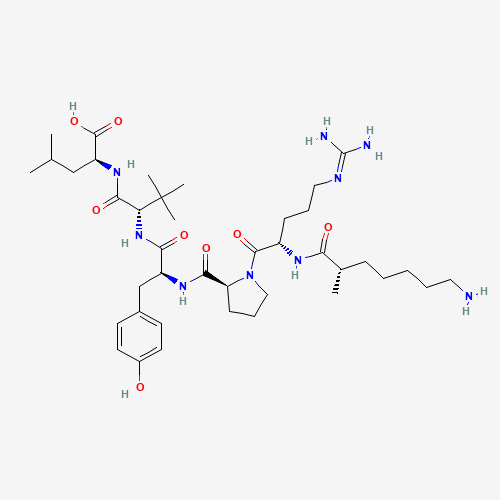
On 2026-06-24, Absci priced a $100M offering, led by Eli Lilly (about $40M for equity), to fund ABS-201, an AI-designed anti-prolactin-receptor (anti-PRLR) antibody, in androgenetic alopecia and endometriosis.
That is a large bet on a hair-loss mechanism that has nothing to do with DHT. The pathway it targets is real. The question this page works through is what the actual human trials behind it do, and do not, show.
The science
Human scalp follicles both make prolactin and carry its receptor, and both are up-regulated at the anagen-to-catagen switch. Adding prolactin to organ-cultured human follicles significantly inhibits hair-shaft elongation and forces premature catagen (Foitzik 2006).
The same holds in mice: prolactin induces catagen and delays hair regrowth, and prolactin-receptor-knockout mice have an altered hair-cycle clock (Craven 2001). So removing the brake, by blocking PRLR, could in principle prolong the growth phase, on a pathway entirely separate from DHT. The diagram below shows the logic: prolactin signals through PRLR to push the follicle into catagen; block PRLR and the follicle should stay in anagen longer.
Brake on. Prolactin binds PRLR and pushes the follicle into catagen, the regression phase (Foitzik 2006; Craven 2001). The pathway is real and separate from DHT.
The precedent
Hope Medicine built the first anti-PRLR antibody for hair, HMI-115 (originally Bayer's BAY-1158061, licensed to Bayer in 2019). Its Phase 1b in Australia enrolled 16 patients (12 male) over 24 weeks. It was open-label, with no placebo group.
In the men, mean non-vellus target-area hair count rose about 14 hairs/cm2 vs baseline. The company reported this as statistically significant, with no p-value released. On paper that looks like minoxidil-range, but it comes from an uncontrolled study with no placebo group, so a chunk of that 14 is the placebo effect a real trial would subtract out. Adjust for that and the true effect is probably smaller than what a generic minoxidil delivers in a controlled trial.
The evidence
Three trials define what is actually known. One open-label study is the only efficacy signal. One rigorous placebo-controlled Phase 2 finished over a year ago and has never been released. The lead AI program has not measured hair on a single person. The ladder and table below lay out exactly where the case stands.
12 men. Open-label. No placebo group.
Hair count up about 14 hairs/cm2 vs baseline.
Placebo-adjusted, probably worse than minoxidil.
the only efficacy signal
192 men. Randomized, placebo-controlled.
Hair count = primary endpoint. Completed Nov 2024.
They published the same antibody's endometriosis trial in The Lancet. The hair results: silent.
hair results: never released
32 healthy volunteers. One dose, into a vein.
Primary endpoint: side effects.
Hair measured on: zero people. Still recruiting.
efficacy data: none
| Program | Trial | n | Design | Primary endpoint | Status | Result | Verdict |
|---|---|---|---|---|---|---|---|
| HMI-115 | Phase 1b | 12 men | open-label, no placebo | none stated | done | about +14 hairs/cm2 vs baseline | the only efficacy signal |
| HMI-115 | Phase 2 (NCT06118866) | 192 men | randomized, placebo-controlled | hair count, 24 wk | completed Nov 2024 | never released | hair results: never released |
| ABS-201 | Phase 1/2a (NCT07317544) | 32 healthy | single IV doses, SAD | adverse events (safety) | recruiting | safety / PK only; no hair measured | efficacy data: none |
SAD = single ascending dose. The open-label Phase 1b is the only efficacy signal; the placebo-controlled Phase 2 hair results have never been released; ABS-201 measures safety and pharmacokinetics, not hair.
The tell
HMI-115's endometriosis Phase 2 was published in The Lancet Obstetrics, Gynaecology and Women's Health in November 2025, and it was positive: dysmenorrhea pain fell roughly 27 to 42% across doses.
The hair Phase 2, which finished a full year earlier, has stayed silent. When a company publishes one indication and sits on the other, the silent one is rarely the winner. That is an inference, labeled as such, not an assertion that the hair trial failed. But it is the single most informative fact on this page: the rigorous hair test exists, it is finished, and no one has shown the result.
The economics
PRLR drugs are monoclonal antibodies: grown in mammalian cell culture, dosed in hundreds of milligrams, and priced like biologics, which means thousands to tens of thousands of dollars per year. For a lifelong, cosmetic, out-of-pocket hair market competing with a roughly $20-per-month generic, that is a steep bar.
ABS-201's roughly 65-day half-life (two to three injections over six months) is partly designed to ease that bar. For context, other anti-PRLR antibodies exist (LFA102, Novartis), but they were oncology programs that did not pan out, and none has been tested for hair.
The verdict
The prolactin pathway is real and the safety looks clean, so this is not a scam. But $100M is riding on a target whose only rigorous efficacy test is unreleased, and whose lead AI program has not measured hair on a single person.
Sit with that unreleased trial, because it is the most important fact on this page. Companies publish the studies that help them and stay quiet on the ones that do not. HMI-115's sponsor did exactly that: the endometriosis Phase 2 went into The Lancet, while the hair Phase 2, which finished a full year earlier and was the rigorous, placebo-controlled test everyone wanted, has never been shown. The most likely reason a completed, controlled hair trial never sees daylight is that the result was not worth showing. That is an inference, not a proven fact, and the data could still surface. But a finished trial that goes silent almost never went well.
And that silence is not just HMI-115's problem, it is the warning sign hanging over ABS-201. ABS-201 blocks the very same receptor, on the very same pathway, for the very same indication. The one rigorous test of whether blocking PRLR grows hair has, in all likelihood, already been run, and the people who ran it chose not to share the answer. A second antibody hitting the same target does not get to start from hope; it starts a step behind, carrying the burden of proving in a controlled trial what the first one apparently could not. Until ABS-201 actually measures hair against placebo, the most informative data point we have is the trial nobody will let us see.
Real target. Clean safety. Hype ahead of the evidence. Not a scam, and not a breakthrough. The pathway is real. The hype is the product.
Caveats
This page summarizes published literature, company disclosures, and public trial registrations, and is for informational and educational purposes only. It is not medical advice and not investment advice. ABS-201 and HMI-115 are investigational; neither is approved for hair loss, and both are discussed off-label.
No PRLR blocker has grown hair in a controlled human trial. The only efficacy signal is one open-label, 12-man Phase 1b with no placebo group. Open-label hair counts overstate real effect.
The one rigorous test is unreleased. The HMI-115 hair Phase 2 (192 men, randomized, placebo-controlled) completed in November 2024 and has posted no results. We treat its silence as suggestive, not as proof of failure.
ABS-201 has no hair data at all. Its current trial measures adverse events and pharmacokinetics in healthy volunteers; hair has not been measured on a single person.
Antibodies are expensive. These are injected biologics priced in the thousands to tens of thousands per year, competing in a cosmetic market against generics that cost about $20 a month.
References
The prolactin hair-cycle literature and the public clinical record behind every trial, number, and date above.
At Anagen
PRLR antibodies are years from proof and priced like biologics. The treatments with controlled human evidence for hair loss right now work through DHT and the growth phase. A licensed clinician decides whether any of these is right for you.
Precision Dutasteride is a topical dutasteride family available in 0.03%, 0.3%, and 1% strengths.
Starting at$79.92/ mo
Explore