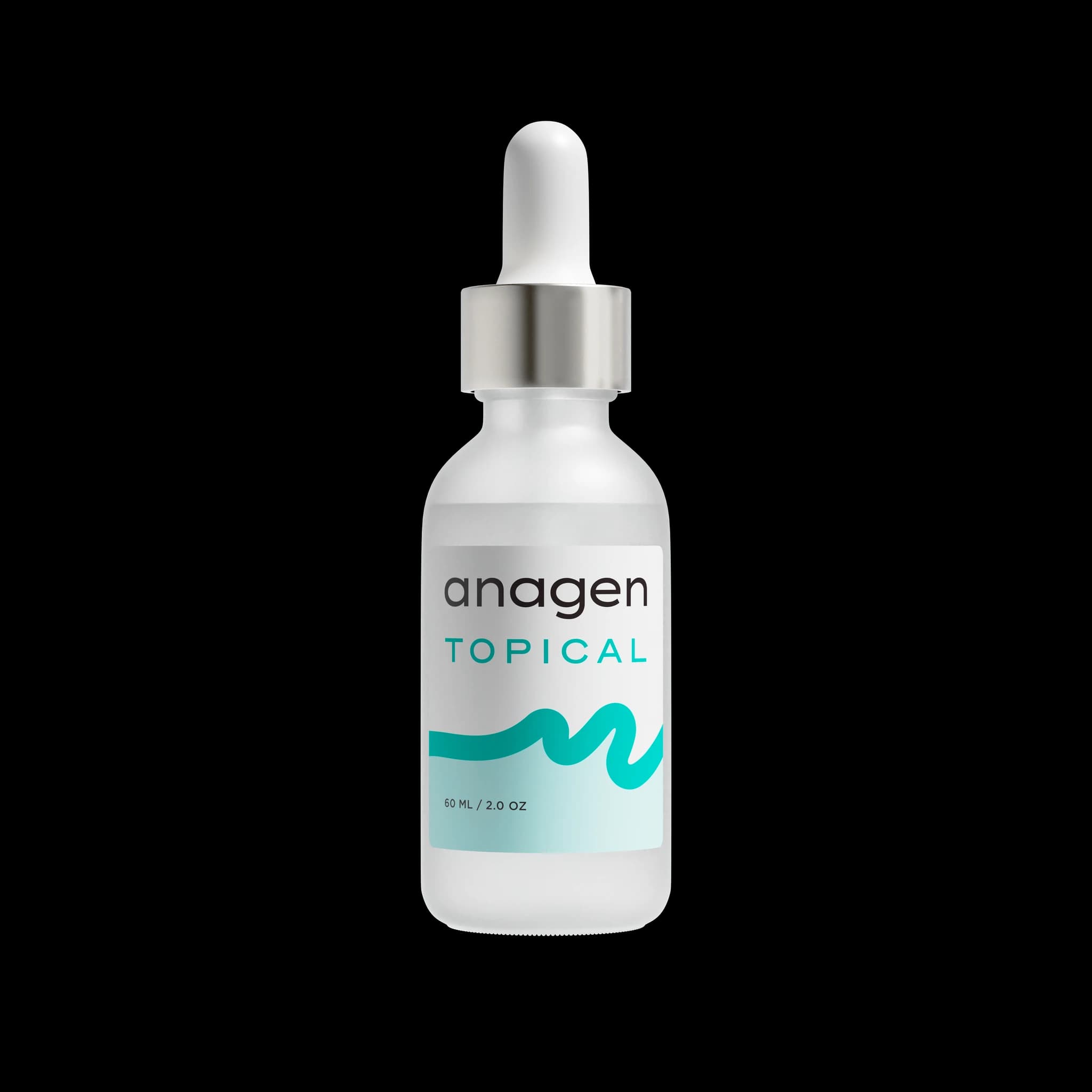
Topical Diazoxide
PatentedAn investigational topical potassium-channel opener for people who do not respond to minoxidil.
- Diazoxide (final strength pending)
Refundable founding deposit$249.99 one time
ExploreInvestigational · Formulation research
Stage 01 · Method Ready
Before you can report how much of a drug dissolved, you need a way to turn absorbed light into milligrams. That instrument did not exist for this molecule in our lab a week ago. It does now.
Thermo Scientific Varioskan LUX · 96-well UV-compatible microplate · Triplicate wells per level · 25.3 °C · SkanIt session "Diluted dzx.skax", 29 July 2026 · Prepared 31 July 2026
The calibration curve
Seven levels from 0.0000–0.0990 mg/mL, triplicate wells at each level, read at 267 nm on a Thermo Scientific Varioskan LUX at 25.3 °C. The fitted relationship is Absorbance = 21.78048 × concentration + 0.06406.
The gating question
Equilibrium solubility is measured by putting excess solid into a vehicle, shaking it until nothing more will dissolve, then reading the clear liquid above the solid. The reading is an absorbance. It only becomes a concentration if you have calibrated the instrument against known amounts of the same molecule first. Everything downstream, every vehicle ranking and every loading decision, inherits the quality of that one calibration.
Absorbance is an absolute measurement, but the conversion from absorbance to milligrams per millilitre is specific to the molecule, the wavelength and the solvent. Build it before precious equilibrated samples exist, not after.
The conventional UV diluent for this molecule is 0.1 M sodium hydroxide, which is roughly pH 13. Benzothiadiazines are documented to decompose during agitated studies above pH 8. Methanol removes the variable instead of managing it.
The curve is built on a reference standard of at least 99% purity, corrected for its certificate-of-analysis value when weighed. Skipping that correction would bias every solubility number by the same amount, invisibly.
The run we threw away
The preceding run was read undiluted and the absorbance went past what the instrument can resolve. Above roughly 2 AU, so little light reaches the detector that the reading stops being trustworthy. We diluted every working standard five-fold, 200 microlitres into 800 microlitres of methanol, and ran it again. That is the run reported here.
One afternoon and a plate of standards. Nothing downstream was affected, because no equilibrated sample existed yet. This is exactly the failure you want to have early.
The top standard still reads 2.213 AU, which is at the edge of the robust range. Unknown samples that read above the top standard must be diluted and re-measured rather than extrapolated.
The record
Coefficients of variation ran from 0.41% to 3.68%. The largest spread was at S3 and it still sat under 4%. Repeatability at this level is what lets a small difference between two vehicles count as a real difference.
| Level | Conc. (mg/mL) | Mean (AU) | SD | CV (%) |
|---|---|---|---|---|
| Blank | 0.0000 | 0.0492 | 0.0015 | 3.09 |
| S1 | 0.0099 | 0.2816 | 0.0041 | 1.47 |
| S2 | 0.0198 | 0.4949 | 0.0020 | 0.41 |
| S3 | 0.0396 | 0.9472 | 0.0348 | 3.68 |
| S4 | 0.0594 | 1.3636 | 0.0233 | 1.71 |
| S5 | 0.0792 | 1.7829 | 0.0110 | 0.62 |
| S6 | 0.0990 | 2.2134 | 0.0266 | 1.20 |
Scope of the method
The run report says so directly. Linearity and repeatability are two properties of an analytical method. Accuracy, recovery, specificity, stability and lower-range sensitivity are others, and none of them have been evaluated. Ultraviolet absorbance is also not stability-indicating: it cannot tell diazoxide apart from a breakdown product that absorbs at the same wavelength.
What the curve is good for is a relative comparison across matched vehicles read on the same instrument in the same week, which is exactly what a screen needs. It cannot serve as a specification, a release test, or any number that leaves this program without chromatographic confirmation.
Stage 02 · Solubility Screen
Excess diazoxide goes into every candidate vehicle and is shaken to equilibrium. Then we measure what went into solution. The design loaded on 3 August 2026 and scheduled its 72-hour readout for 6 August 2026. Results are not published on this page yet.
Dedicated sacrificial endpoint vials, each opened once, at 24, 48 and 72 hours · Residual solid retained · DZX Stage 0 Protocol v3.0
Why this has never been done
We ran three parallel literature sweeps across journals, patents, vendor data and chemical databases before designing the screen. The gaps are not gaps in our reading.
There is no measured solubility for diazoxide in diethylene glycol monoethyl ether or dimethyl isosorbide anywhere. No solubility-versus-cosolvent-fraction curve. No Hansen parameters. The measurement has never been made.
The only quantitative aqueous data located anywhere sits inside a patent family, at pH 7 and above, image-locked in scanned PDFs. The entire wearable range below pH 7 is unmeasured.
Cited everywhere as roughly 8.5, traceable to no primary determination. A 2026 review says 8.74, also uncited. PubChem's 10.43 is a computational artifact. Fitting our own pH-solubility data replaces it with one we measured.
No solubility measurement for diazoxide exists at 32 degrees Celsius in any solvent at any pH. Skin surface temperature is the condition that governs delivery in use, and it will have to be ours too.
The decision rule
Only dissolved drug crosses skin. Undissolved solid sitting in the bottle contributes nothing to the instantaneous driving force; it buys duration, not rate. A 5% suspension in a vehicle that dissolves 1% delivers the same flux as a 1% saturated solution and wastes four fifths of the active ingredient.
So the loading is written as a multiple of measured saturation rather than as a round percentage chosen in advance. Until this screen reads out, any strength stated for this preparation is a guess, including ours. That is why no number appears in this panel.
A formulable vehicle at the top of the range keeps the suspension architecture on the table and gives room to trade loading against feel and tolerability.
A low number pushes the product toward a lower-strength, fully dissolved preparation, and it would mean the strength lands below what our own pages currently describe. We publish it either way.
The second prize
Diazoxide is a weak acid, so its solubility should follow S = S₀ × (1 + 10^(pH − pKa)). Fitting our own ladder to that relationship returns both the intrinsic solubility and the pKa, for free, from analysis we are already doing.
At pH equal to the pKa, solubility has only doubled. Ten-fold takes roughly pH 9.5 and a hundred-fold takes 10.5, which is why the one study that ever grew hair with topical diazoxide ran at pH 10.0 to 10.5 and could not have been a wearable product. Our ladder stops at 9.0. It characterises the foot of that climb, and it is not there to pick a product pH: scalp is around 4.5 to 5.5 and a daily leave-on above about 6 costs tolerability.
Treatment Science · K-ATP channel opener · No human hair trial
Diazoxide is a blood-pressure and low-blood-sugar drug that opens the same class of ATP-sensitive potassium channel minoxidil opens, and on its oral form the most common side effect is excess hair across the body. It grew hair in cultured follicles and in balding monkeys in a 16-month study, yet it was never tested for pattern hair loss in a single human trial. That gap, a real target with no human evidence, is what Anagen's investigational topical diazoxide program is built to begin closing, carefully. Minoxidil remains the proven, FDA-approved option today; topical diazoxide is early-stage and investigational.
Evidence synthesis · K-ATP-opener pharmacology, isolated-follicle and primate data, and the human genetics of Cantu syndrome · Diazoxide is investigational for hair loss and not FDA-approved for it; Anagen's topical diazoxide is an early-stage formulation, bench-gated and not yet available for dispensing
Overview
Minoxidil is the blood-pressure drug that became a blockbuster hair treatment. It has a twin, a second medicine from the same era that grows hair in nearly every preclinical model it has been tested in, if a little less potently than minoxidil, and yet never made it into a single bottle for your scalp.
Diazoxide was never developed, approved, or marketed to grow hair. It is a decades-old medicine used to treat dangerously high blood pressure and, more durably, hyperinsulinism, a condition where the pancreas releases too much insulin and blood sugar crashes. It grows hair anyway, reliably enough that doctors treat it as an expected complication rather than a surprise.
The K-ATP connection
Diazoxide and minoxidil belong to the same drug family, the ATP-sensitive potassium channel openers. A K-ATP channel is a tiny gate on the surface of a cell, assembled from a regulatory sulfonylurea receptor (SUR) and a pore-forming subunit (Kir6). When these openers bind, they hold the gate open, letting potassium flow and changing how the cell behaves (Davies 2005).
The human scalp follicle does not carry one of these gates. It carries two. Researchers found Kir6.2/SUR1 channels in the follicle's growing matrix and Kir6.1/SUR2B channels in the dermal papilla and sheath, and minoxidil activates the SUR2 form and not the SUR1 form in the one study that has localised these channels in human follicle (Shorter 2008); minoxidil has never been tested directly on the channel proteins grown on their own in a dish, so its selectivity is the leading model rather than a measured profile. In the same human-follicle experiments, minoxidil and the channel blocker tolbutamide directly opposed each other, which is one of the cleaner pharmacological readouts for channel involvement available.
That the channel really is doing the work is also the key to where diazoxide could help and where it could not. Minoxidil is a prodrug: the scalp enzyme SULT1A1 has to convert it into minoxidil sulfate before it can open the follicle's SUR2B channel, and people whose follicles make little of that enzyme tend to respond poorly. Diazoxide opens the same SUR2B channel directly, with no sulfation step, so in principle it is a lever for that one kind of minoxidil non-responder, the sulfation-limited kind. It is not a stronger drug, and it would do nothing for someone whose follicles fail to respond further downstream.
The pharmacology does not entirely flatter diazoxide. When the two follicular channel types were built individually in lab cells and tested side by side, diazoxide turned out to open them very differently. At SUR1, the form found in the follicle's growing matrix, it is a full opener, reaching 97% of maximum. At SUR2B, the form in the dermal papilla and sheath, it only ever reaches 38% even at saturating concentrations, which makes it a partial opener there (Dyhring 2023). At the cardiac SUR2A form it does essentially nothing unless the cell is already energy-starved (D'hahan 1999). That would be a useful safety property if it holds in people, which has not been tested. So diazoxide reaching SUR1 is a point in its favour, because minoxidil cannot open SUR1 at all. That point is contested, and the counter-argument is the stronger published one: hypertrichosis tracks the SUR2B/Kir6.1 channel specifically, since drugs and mutations hitting the other K-ATP channels do not grow hair in people, and on that reading diazoxide's SUR1 activity buys the follicle nothing. The single result pointing the other way, a SUR1-selective opener growing hair, is the red deer experiment, never repeated. Whether SUR1 access helps hair is unresolved, and it is one of the questions this program exists to answer. But SUR1 is also the pancreatic beta-cell channel, the one whose opening suppresses insulin and raises blood sugar. Diazoxide's strongest activity is at the channel responsible for its worst systemic effect, which is why keeping it topical and out of the bloodstream is the safer way to use it.
Minoxidil has to be switched on by a scalp enzyme before it can open a follicular potassium channel.
Diazoxide opens channels directly, skipping that step.
Inactive as applied. It is a prodrug.
The follicle enzyme sulfates it. This step is required.
Only now can it act on the channel.
Hyperpolarizes the follicle, giving a growth signal.
Active as-is. Not a prodrug.
No enzyme conversion needed. The SULT1A1 step is bypassed entirely.
Strongest at SUR1 which minoxidil does not reach. It reaches SUR2B too, to about a third of maximum.
Preclinical evidence
The laboratory evidence for diazoxide is deep for a drug nobody markets for hair. It stacks up across three levels. In cultured whole follicles, minoxidil, pinacidil, diazoxide, and cromakalim all stimulated DNA synthesis, the molecular signature of cells getting ready to divide, and the authors concluded the openers act on the follicle directly rather than through the bloodstream (Harmon 1993). In a cleaner isolated deer-follicle assay, diazoxide increased growth at 10 micromolar, and a sulfonylurea that shuts the channel abolished the effect, the fingerprint that the growth runs through the gate (Davies 2005).
The most striking result is also the oldest. In 1990, Hideo Uno, whose stumptailed-macaque model helped validate both minoxidil and finasteride, applied 5% topical diazoxide to the bald frontal scalps of balding macaques, 0.2 mL over roughly 50 square centimetres, once a day, five days a week. All five treated animals thickened or maintained frontal hair across the 16-month period, three of them with progressive regrowth beginning at five to six months, with follicles enlarging and shifting from rest into the growth phase, and no change in testosterone, blood sugar, insulin, or blood pressure (Uno 1990). When the animals were switched to vehicle and then taken off treatment, the long thick hairs were replaced by short vellus hairs again, which is the strongest internal evidence that the drug rather than the passage of time produced the effect.
The vehicle is the part most often left out. Uno's 5% diazoxide was not dissolved in anything a person would want to wear. Table I of the paper lists 50% isopropyl alcohol, 10% benzyl alcohol, two surfactants including sodium dodecyl sulfate, and sodium hydroxide added to bring the whole thing to pH 10.0 to 10.5. Diazoxide is a weak acid, so the alkali is what dissolved it. That matters because pH 10 is the point at which the skin barrier measurably swells and its lipids stiffen (Ananthapadmanabhan 2003), and sodium dodecyl sulfate is a standard laboratory barrier disruptant. Some unknown share of Uno's result may therefore belong to a vehicle that was stressing the skin open, not to diazoxide. The paper never assessed skin reaction, so it cannot settle the question either way.
The tell nobody followed up on
All five balding macaques held or thickened their hair on topical diazoxide, three of them with progressive regrowth, in the primate model used to validate minoxidil and finasteride, and still no one ever ran a human hair trial (Uno 1990).
Nobody ran the hair trial for diazoxide. That is why the evidence stops where it does.
The genetic proof
The strongest proof that opening this channel grows hair is genetic, and nature ran the experiment for us. Cantu syndrome is a rare inherited condition caused by gain-of-function mutations in the genes that build the K-ATP channel, ABCC9 (SUR2) and KCNJ8 (Kir6.1). These mutations make the channel harder to switch off, so it stays open more than it should (Grange 2020).
One of the defining features of Cantu syndrome is congenital hypertrichosis. These children are born covered in hair. The gate that minoxidil and diazoxide pry open with a drug, Cantu patients have partly open from birth, in every cell, for life, and the hair follows. It is strong human genetic evidence that the channel is not a bystander. The Cantu mutations sit in the SUR2/Kir6.1 pair that minoxidil already opens, not the SUR1 pair diazoxide reaches.
Why only one became a hair drug
If diazoxide grew hair in a dish, in isolated follicles, in balding monkeys, and human genetics confirm the target, the obvious question is why it is not sitting next to minoxidil on the pharmacy shelf. The answer is in the registries: a search returns zero studies of diazoxide for hair or alopecia. Its entire human hair record is accidental, hypertrichosis observed while treating other diseases.
There are pharmacological reasons minoxidil pulled ahead. Diazoxide was slightly less potent than minoxidil in the one head-to-head assay, red deer follicle organ culture (Davies 2005). Swallowed as a pill it carries dose-limiting side effects, and its most serious risk is pulmonary hypertension, dangerously high blood pressure in the lungs, in newborns, serious enough that the FDA issued a formal warning in 2015 (Herrera 2018). And minoxidil had a well-tolerated topical formulation and a company willing to run the scalp trials. Diazoxide never got that champion.
| Effect | Approximate rate | Source |
|---|---|---|
| Hypertrichosis (excess hair) | 45% pooled, 7.4-89% by cohort | Chen 2021 |
| Fluid retention | about 20% | Chen 2021 |
| Edema | about 11% | Chen 2021 |
| Neutropenia | about 9% | Chen 2021 |
| Pulmonary hypertension (newborns) | about 2.4% | Herrera 2018 (FDA warning, 2015) |
Every one of these is a systemic effect of the pill. They are the reasons chronic oral diazoxide is a hard sell for a cosmetic indication, and why any hair interest would center on a topical designed to stay in the scalp and keep systemic exposure low. Uno saw no systemic hormone, glucose, or blood-pressure change over 16 months of topical dosing (Uno 1990).
What this is
Diazoxide is not a hair-loss treatment. There is no human efficacy data for pattern baldness, no approved product, and no proven scalp treatment. Every human data point is a side effect, not an endpoint. The animal win is five monkeys in one lab in 1990, never replicated in people, and systemic diazoxide is rougher than minoxidil.
Even minoxidil's mechanism is not fully settled. In cultured human outer-root-sheath cells, neither minoxidil sulfate nor the reference opener pinacidil opened the identified potassium channels, which led some researchers to argue part of minoxidil's benefit may be vascular rather than a pure channel effect (Nakaya 1994). The K-ATP story is the leading explanation for both drugs, not a closed case.
What diazoxide is, is a proof of concept: one of several drugs that grow hair by opening the same class of channel, plus a genetic syndrome that confirms the target from the opposite direction. The lesson is not to take diazoxide. It is that the K-ATP channel is a real, druggable target for hair, and minoxidil is only the first key we happened to fit into it. If the channel is what matters, there is no reason minoxidil should be the last drug to open it.
The human evidence
Hypertrichosis, unwanted hair growth across the body, is the most frequently reported side effect of oral diazoxide. Published rates run from 7.4% to 89%. The spread tracks how much was given, for how long, and who was doing the reporting.
| Rate | Cohort | n | Source |
|---|---|---|---|
| 89% | Congenital hyperinsulinism registry | 108/121 | Pasquini 2025 |
| 52% | Pooled multicentre cohort | 170/325 | Welters 2015 |
| 45% | Meta-analysis, six cohorts | 1,142 | Chen 2021 |
| 20% | Adults treated for hypertension | 6/30 | Okun 1963 |
| 8.6% | Japanese post-marketing survey | 384 | Fukutomi 2018 |
| 7.4% | Low-dose protocol, SGA infants | 2/27 | Chandran 2022 |
Dose explains the widest part of the range. The 52% cohort averaged 12.5 mg/kg/day. The 7.4% protocol opened at 3 mg/kg/day and settled at a mean of 4.6.
Duration explains much of the rest. Welters’ patients averaged 57 months on drug. Chandran’s stopped at a median of 63 days.
Who fills in the form explains the last of it. The 89% is patients and families self-reporting to a registry. The 8.6% is clinicians filing adverse-event forms with a regulator. Those two instruments count differently even when the underlying biology is identical.
Three of these rows need handling. The Okun 1963 figure is secondhand: we take it from the Comment section of Menter and Wells 1973 rather than from the 1963 paper. Welters’ 12.5 mg/kg/day is the mean across the full 619-patient set, while the 52% is drawn from the 325 patients with documented side effects, so the dose and the rate describe overlapping groups rather than the same one. An 84% figure also circulates in secondary sources, but it is cited inside Pasquini 2025 rather than drawn from an independent cohort, so it earns no row above.
Every number here is oral diazoxide: whole-body exposure, at doses set to control blood sugar, in patients being treated for a different disease. Nobody has measured what a topical does to human hair. That includes us.
The only in-vivo evidence
Uno 1990 (PMID 2085505) is the only published in-vivo test of topical diazoxide on hair, in any species. The full record of what it measured is short enough to state in full.
The vehicle is why this cannot be copied as-is. pH 10.5, half isopropyl alcohol, and two surfactants will hold a poorly soluble molecule in solution for the length of a primate study. A daily leave-on has to do the same job under conditions skin tolerates, which is a different formulation problem and the one our screen is built to answer.
Limitations
Nothing on this page is a claim that topical diazoxide treats hair loss, or that it is safe or effective for it. There is no FDA-approved topical diazoxide for any use, and Anagen's is an early-stage, bench-gated formulation that has never been given to a person. Everything above is mechanism, animal and side-effect literature, and the constraints below bound all of it.
There is no human hair-loss trial of diazoxide. Every human data point comes from treating a different disease, and none of it was measured as a hair-growth endpoint.
The minoxidil non-responder idea is a hypothesis. Nobody has shown that people who respond poorly to minoxidil respond to diazoxide, or that sulfation explains why any particular person responds poorly. It is why the work is being run at all.
The enzyme is not settled either. Minoxidil needs sulfating, but the isoform has never been established in human scalp: the localisation work says only that at least one sulfotransferase gene is involved. Where this page names SULT1A1, read it as the leading candidate and not a proven identity.
Whether reaching SUR1 helps hair at all is unresolved and contested. The stronger published argument is that hypertrichosis tracks the SUR2B channel specifically, on which reading diazoxide's SUR1 activity does nothing for the follicle. The one contrary result is a single deer experiment nobody has repeated.
Nothing here is comparative. Diazoxide has never been compared with minoxidil in a human, and the two channel numbers on this page cannot be set against each other: diazoxide has been measured on cloned channels and minoxidil never has, so neither drug can be ranked against the other.
None of this describes a product. Strength and vehicle are outputs of bench work that has not finished, and any topical diazoxide would be a compounded preparation supplied only against an individual prescription.
The animal win is small and old. Seven animals in one lab in 1990, five treated and two on vehicle, never replicated in people (Uno 1990).
That study reports no statistics of any kind, only means. Its hair endpoints were photographs graded by eye plus follicles traced under a microscope, so there are no hair counts, no hair weights and no percentage improvement in it. Any specific efficacy number attributed to Uno 1990 has been invented or back-derived from a figure.
Uno's vehicle was 50% isopropyl alcohol and 10% benzyl alcohol with two surfactants at pH 10.0 to 10.5, which is a barrier-stressing formulation rather than a wearable one. How much of the effect was the drug and how much was the vehicle opening the skin is unknown, and no vehicle bridge to a scalp-pH product exists.
That study also never assessed application-site tolerability. Its only skin finding is an absence of abnormality on periodic biopsies, so its silence on irritation is an absence of testing, not a clean safety result.
No plasma or serum diazoxide concentration was measured in Uno 1990, or in any other topical diazoxide study in any species. The systemic safety argument rests entirely on normal glucose, insulin and blood pressure in four animals.
No concentration-response for diazoxide on hair follicles, dermal papilla cells, or keratinocytes has ever been published. The concentration needed locally for a hair effect is therefore unknown, which means the margin between a working local dose and a systemic effect cannot be calculated in either direction.
No NOAEL or no-effect level for diazoxide exists in the public record. The concentrations at which it opens the beta-cell channel are pharmacological measurements, not regulatory toxicology values, and should not be read as safety limits.
The preclinical record is not spotless. In one earlier assay diazoxide did not stimulate hair, which the authors attributed to poor solubility rather than biology (Buhl 1992).
Oral diazoxide is a rougher drug than minoxidil, with fluid retention, deliberate blood-sugar elevation, and a newborn pulmonary-hypertension warning (Herrera 2018).
Even minoxidil's mechanism is not fully settled. One study found minoxidil sulfate did not open the identified channels in a human cell model, suggesting a partly vascular contribution (Nakaya 1994).
Cantu syndrome confirms the target. It shows that opening the channel grows hair in people; whether diazoxide is a safe or effective way to open it on the scalp remains untested.
Frequently asked questions
On the oral drug, taken for a different condition, yes: excess body hair (hypertrichosis) is its most common side effect, reported in roughly 45% of hyperinsulinism patients in a pooled analysis of 1,142 people (Chen 2021), with individual cohorts ranging from 7.4% to 89% by dose and duration. That is a side effect of a systemic medicine and it is not evidence that topical diazoxide treats pattern hair loss, which has never been tested in a human.
No. They are different drugs with different primary uses: diazoxide for low blood sugar and high blood pressure, minoxidil for high blood pressure and hair loss. But both belong to the same drug family: potassium-channel openers, which hold open a gate found in hair-follicle cells, which is why both grow hair (Davies 2005).
There is no approved or studied use of diazoxide for pattern hair loss. It has never been tested in a human hair-loss trial, and oral diazoxide has significant side effects including fluid retention, high blood sugar, and, in newborns, a risk of pulmonary hypertension (Herrera 2018). Topical diazoxide grew hair in balding monkeys (Uno 1990) but has never been developed or proven for people. Anagen does not currently sell or dispense diazoxide; its topical diazoxide is investigational and in early development.
Because no one ran the human trials. Minoxidil had a well-tolerated topical formulation and a company that developed it for hair; diazoxide never got that champion, despite a positive monkey study in 1990 (Uno 1990). It is a development gap, not a biology failure.
Cantu syndrome is a rare genetic condition caused by mutations that leave that same potassium-channel gate stuck partly open. One of its hallmark features is being born with excess hair (congenital hypertrichosis), which is strong genetic evidence that opening this channel drives hair growth (Grange 2020).
Unknown. No head-to-head human study exists. In one isolated-follicle lab assay, diazoxide was somewhat less potent than minoxidil (Davies 2005). Any claim that topical diazoxide beats minoxidil in people is unsupported by human evidence.
The proven option today, and the one we're developing
Minoxidil is the potassium-channel opener with published human hair results and real formulations, and it is the proven option today: topical minoxidil is FDA-approved, and oral minoxidil is used off-label, with a licensed clinician deciding what is appropriate for you and individual results varying. Topical diazoxide, the SULT1A1-independent lever described above, is what Anagen is now developing for the sulfation-based minoxidil non-responder. It is investigational, earliest-stage, and not yet available, and it is open to Founding Members.
An investigational topical potassium-channel opener for people who do not respond to minoxidil.
Refundable founding deposit$249.99 one time
ExploreSources
