PP405 might be the most hyped hair loss treatment since Rogaine and Propecia. As usual, the community has split into two camps: those who are convinced it will be a cure, on little more than hope, and those who are convinced it will fail, on little more than decades of disappointment. My goal here is the harder middle path, an honest look at the good, the bad, and the ugly of what the science actually says.
This is a plain-language version of my full deep-dive, PP405: The Good, the Bad and the Ugly — that original write-up has the full bibliography (85+ citations) behind every claim below. For Anagen's separate take on the most recent clinical readout, see their coverage of the AAD 2026 PP405 data.
One thing to keep front of mind throughout: PP405 is an investigational drug developed by Pelage Pharmaceuticals. It is not FDA-approved, and the human efficacy data is still thin. Everything below is about what the biology predicts, not what has been proven in patients.
What is PP405 and how does it work?
- PP405 is a small-molecule inhibitor of the mitochondrial pyruvate carrier (MPC), the transporter that shuttles pyruvate into the mitochondria. By blocking that door, PP405 deliberately pushes cells into a "Warburg-like" state, the same metabolic shift seen in rapidly dividing cells, where energy comes from glycolysis rather than from burning fuel in the mitochondria.
- Here is the chain of events in plain terms. Normally, glucose is broken down to pyruvate, pyruvate enters the mitochondria, and the cell extracts a large amount of energy through oxidative phosphorylation (OXPHOS). When MPC is blocked, pyruvate can't get in. It piles up in the cell and is converted instead into lactate by the enzyme LDHA. That conversion regenerates the NAD+ that glycolysis needs to keep running, so the cell settles into a fast, low-efficiency, lactate-producing metabolism. Rising lactate is the tell-tale sign that glycolysis has taken over.
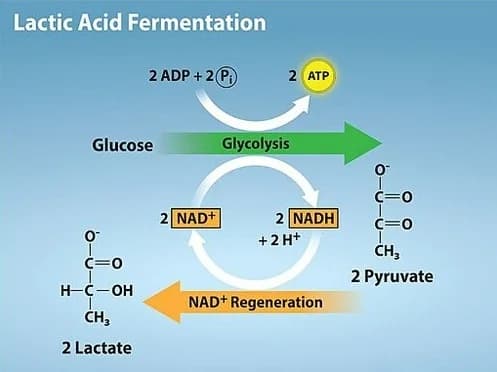
Overview of anaerobic glycolysis induced by PP405.
- Why would that grow hair? Because stem cells love glycolysis. Stem cell niches, including the hair follicle stem cell (HFSC) niche, are low-oxygen environments that lean on glycolysis to stay in a self-renewing, undifferentiated state. Glycolysis also produces fewer reactive oxygen species than OXPHOS, which protects stem cells from DNA damage. OXPHOS, with its higher energy output, is more associated with cells that are differentiating, that is, committing to become a specific tissue.
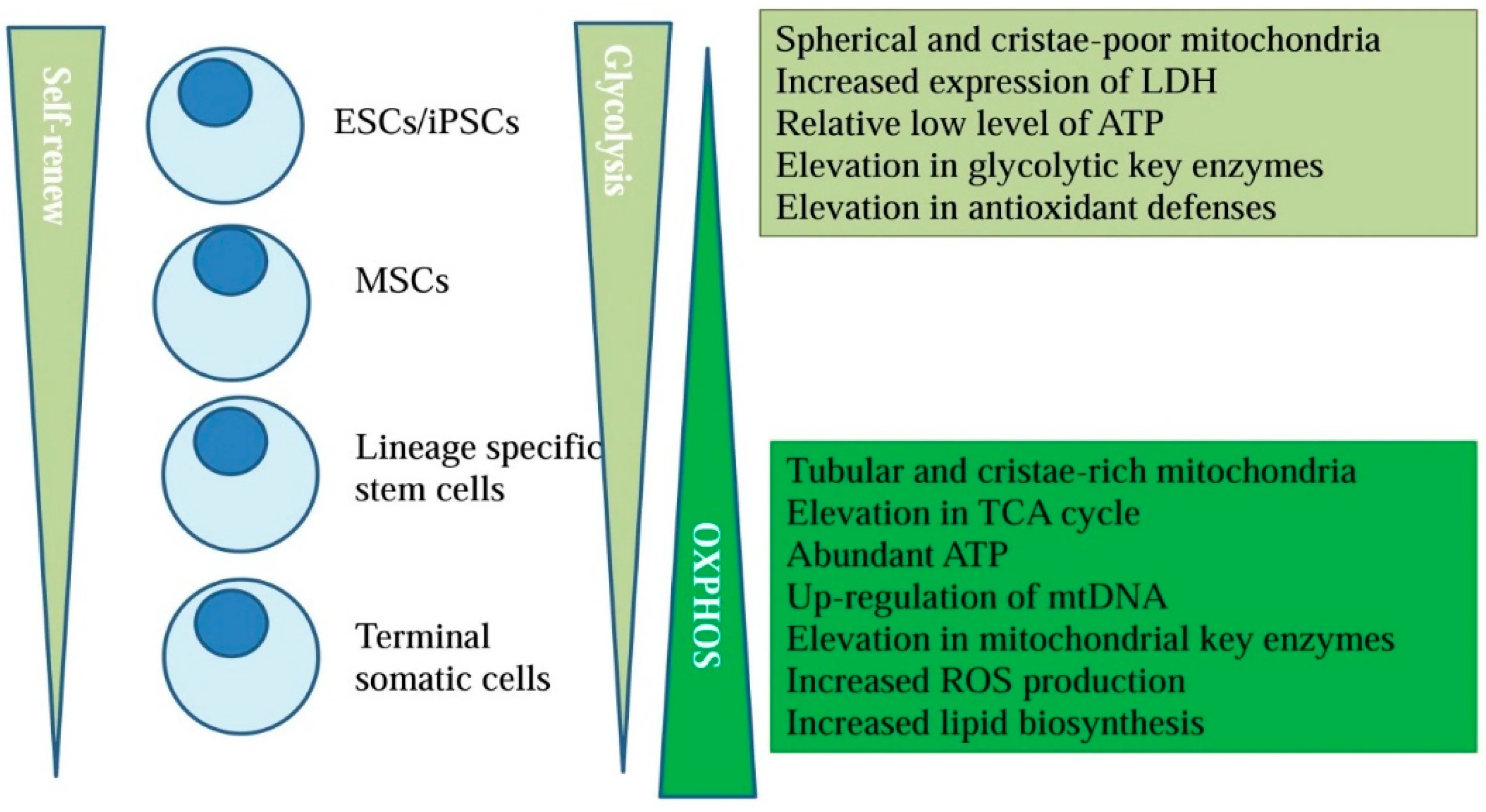
Typical effects of metabolism on stem cell renewal and differentiation.
- Pelage's foundational research (Flores, Lowry and colleagues at UCLA) showed that driving this glycolytic, lactate-producing state activates dormant hair follicle stem cells and triggers precocious anagen, the early onset of a new growth phase, in mice. PP405 is the drug built around that observation. Notably, a separate group (Kim and colleagues at the Max Planck Institute) later showed the HFSC state does not actually depend on glycolysis — a key caveat Pelage's narrative tends to skip.
The central problem: activating stem cells isn't the bottleneck in pattern hair loss
This is where the elegant mechanism runs into the actual disease.
- Androgenetic alopecia (AGA) is, at its core, a story of miniaturization. With each successive cycle, the follicle produces a slightly smaller, thinner hair shaft, until eventually it makes only a near-invisible vellus hair, the same kind of peach fuzz that covers most of your body.
- Crucially, the follicles in a balding scalp are not simply asleep. They keep cycling. They keep activating their stem cells and growing hairs, just progressively smaller ones. That continued cycling is the proof: if hair follicle stem cells had gone quiet, the follicle wouldn't cycle at all. So quiescent stem cells are not the problem to solve.
- This leads to a blunt analogy. You already have vellus follicles all over your arms, and they activate their stem cells through the very same process. Activating stem cells harder doesn't turn arm hair into scalp hair. By the same logic, activating stem cells on a balding scalp should not, on mechanism alone, turn a vellus follicle back into a thick terminal one. It can wake a dormant follicle up sooner, but it can't change the size of the hair it produces.
- The mouse data points the same way. Deleting Mpc1 in mouse hair follicle stem cells makes hair regrow faster after the follicles are activated, but the hairs come back the same size they would have been anyway. Ear hair stays short; back hair stays long. Stimulating glycolysis controls the timing of the hair cycle, not the dimensions of the hair.
So what actually determines hair shaft size?
- The size of a hair shaft is programmed by the dermal papilla (DP), the small cluster of signaling cells at the base of the follicle. The DP instructs stem cells to differentiate into the progenitor cells that physically build the hair, largely by supporting Wnt signaling.
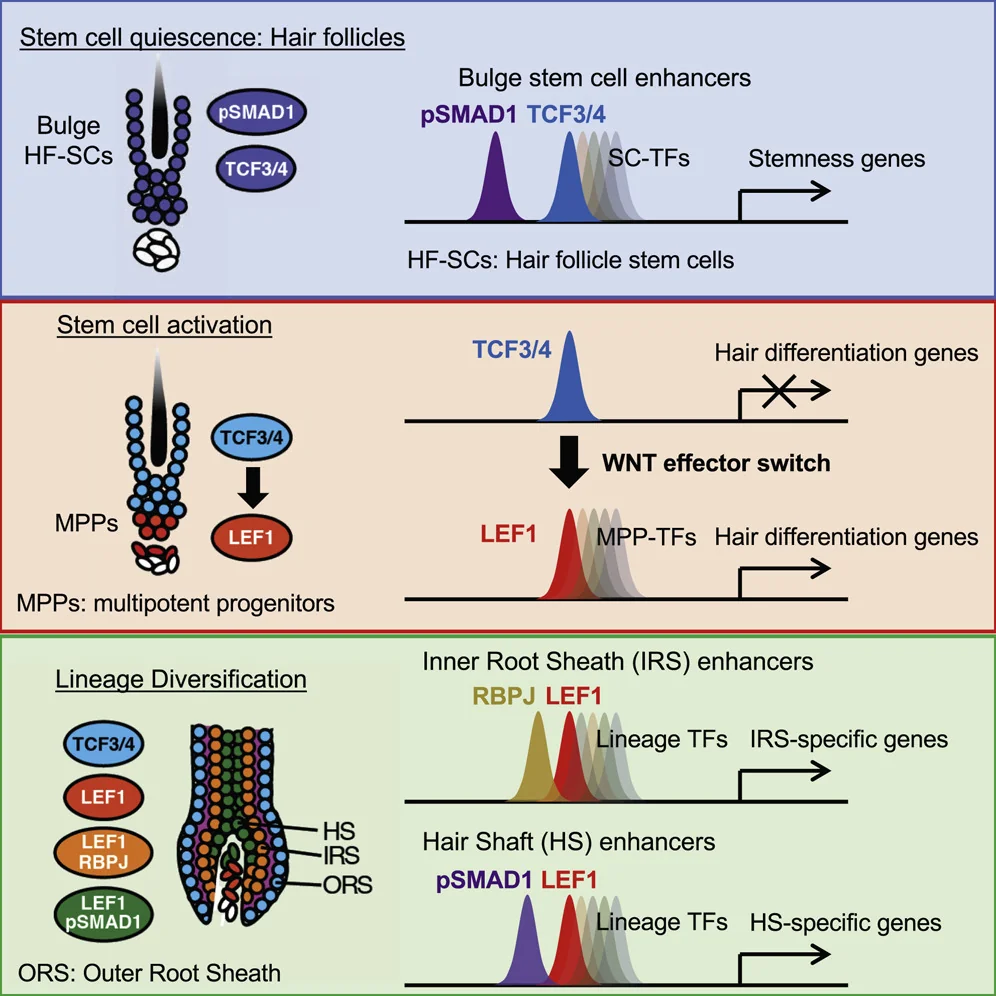
Schematic showing requirement of Wnt activation (LEF1) for differentiation of HFSCs.
- This is exactly where DHT, the hormone behind pattern baldness, does its damage. Over many cycles, DHT shrinks the dermal papilla and reduces its cell count. Below a critical threshold, the DP can no longer send enough signal to build a visible hair, and the progenitor cells that produce the shaft become depleted. Notably, it's the progenitors that are lost in bald scalp, the stem cells are retained and remain perfectly capable of activating.
- And here's the metabolic twist that cuts against PP405's thesis: turning stem cells into hair-building progenitors requires the opposite metabolic switch, from glycolysis toward OXPHOS and glutaminolysis (work from Kim and colleagues). Pushing cells harder into glycolysis, as PP405 does, is the metabolic state of self-renewal, not the state of differentiation. Lactate can wake stem cells up, but without Wnt signals from a healthy dermal papilla, those activated cells can't differentiate into enough progenitors to build a real hair.
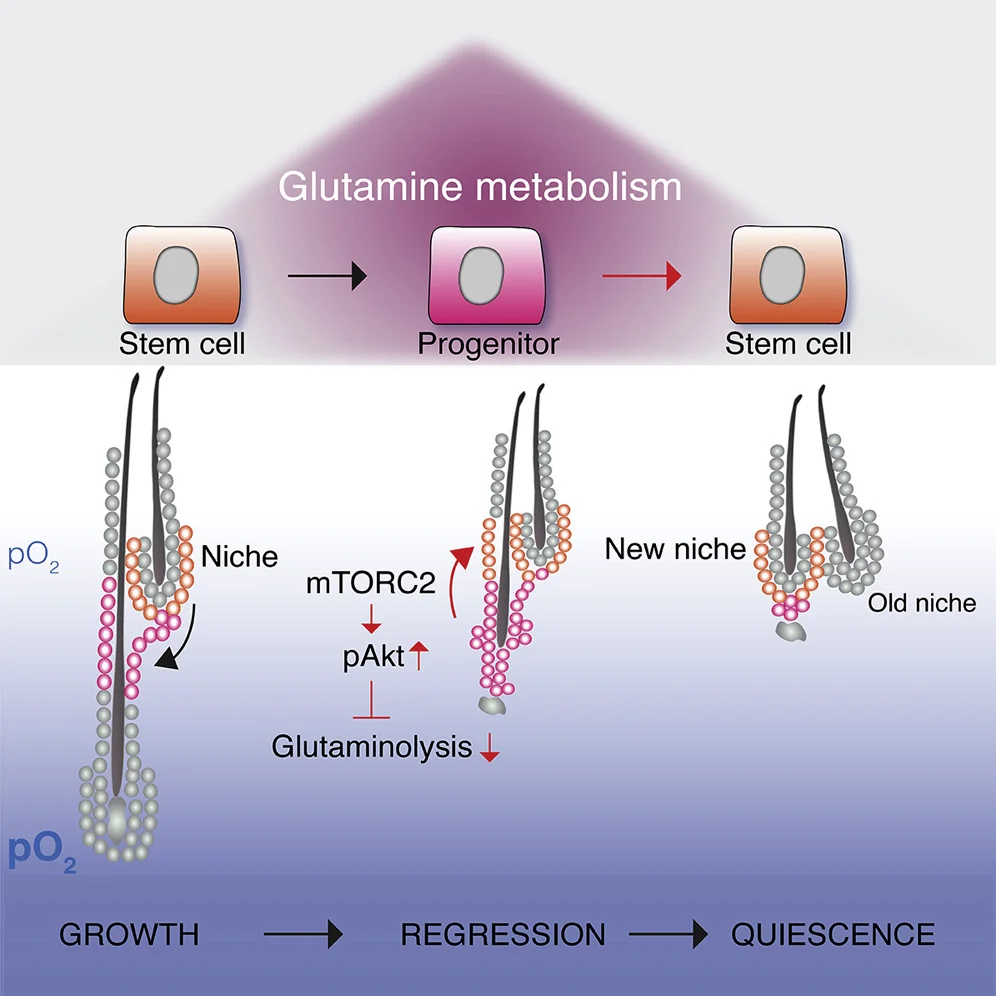
Cell fate progression and reversibility of HFSCs.
- A telling clue: in balding scalp, the same stem cell pool increasingly produces sebaceous (oil) gland cells instead of hair, which is why miniaturizing follicles are often paired with enlarged sebaceous glands. The stem cells aren't failing to activate, they're being routed down the wrong path in the absence of Wnt. Accelerating the cell cycle with glycolysis doesn't fix that misrouting, it just speeds up production of whatever the follicle was already going to make, which in late-stage AGA is fuzz, oil, and skin.
How Pelage frames it — and why that's misleading
Some of Pelage's public comments imply PP405 can overcome essentially any hair loss trigger by switching the growth pathway back on. I think that's misleading at best.
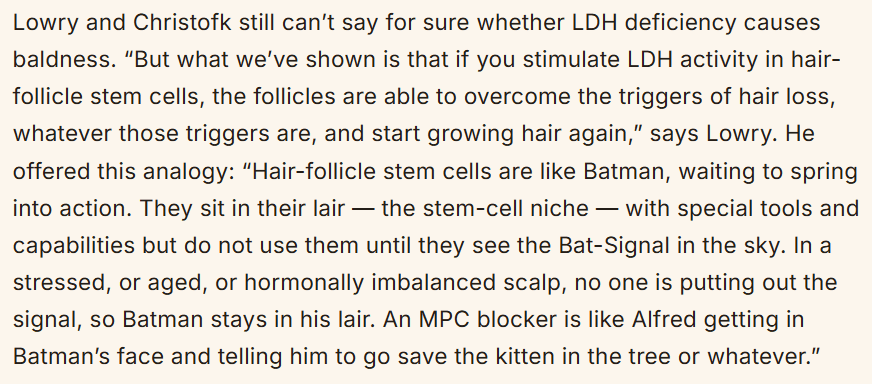
Pelage founder's comments on PP405.
- Showing that Wnt switches on after you kick off the hair cycle in a healthy follicle does not prove your drug can fix Wnt signaling in a balding one. Here's the analogy I keep coming back to: it's like taking a car with a bad starter to a mechanic, who then demonstrates in a different car — one with a working starter — that the starter runs downstream of the battery, and concludes that a new battery will fix your car. You replace the battery and the car still won't start, because the starter itself is broken. In the same way, LDHA and lactate can't switch Wnt back on if the Wnt machinery in the dermal papilla is itself dysregulated or shut off. The battery isn't the problem.
We've seen glycolysis-boosters before
If forcing glycolysis were the key to regrowth, we'd expect a long trail of evidence from the many other compounds that do the same thing. Instead, the trail is mostly disappointment.
- Stemoxydine mimics the low-oxygen signaling that ramps up glycolytic genes in human follicles. In L'Oréal's own testing it increased hair density by about 4% over placebo, a marginal effect.
- Beta-2 agonists such as procaterol stimulate glycolysis in stem cells and trigger precocious anagen in mice in a way comparable to PP405, yet they show no notable effect on AGA in people who take them. (This pathway also represses FGF18, a brake on the stem-cell cycle that is itself markedly downregulated in bald scalp — but that affects cycle timing, not shaft size.)
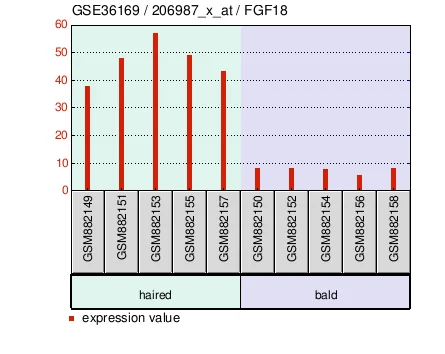
FGF18 transcription in bald scalp samples compared with occipital scalp.
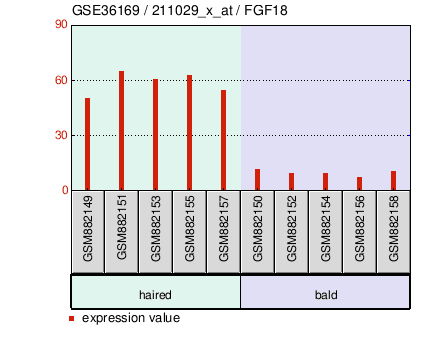
FGF18 transcription in bald scalp samples compared with occipital scalp (a second dataset).
- Rapamycin, metformin, and the TZD diabetes drugs all push cells toward glycolysis, and TZDs actually inhibit MPC, the very same target as PP405. Rapamycin can raise follicle lactate more than threefold, comparable to MPC inhibitors. These drugs are taken by millions of people. A meaningful effect on something as visible and common as male pattern baldness would almost certainly have been noticed by now.
- Minoxidil, meanwhile, already activates hair follicle stem cells (among its other effects), and it does so without needing to force a metabolic defect. That argues there usually isn't a broken glycolysis "switch" in AGA follicles waiting to be flipped, and that stacking PP405 on top may not add much.
Inducing lactate, it turns out, is trivial and unremarkable. Rapamycin does it, Pelage's own "JXL-series" molecules do it, and the classic MPC inhibitor UK-5099 does it — none of which has translated into a baldness cure.
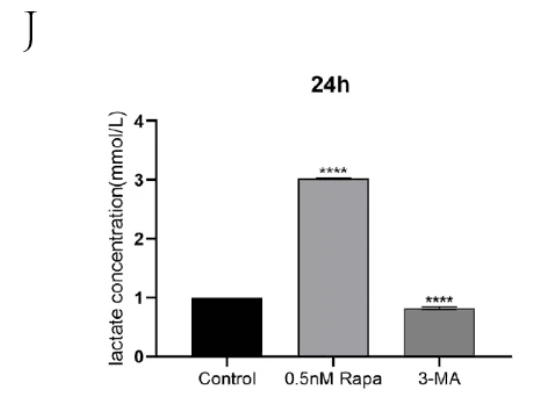
Lactate induction by rapamycin.
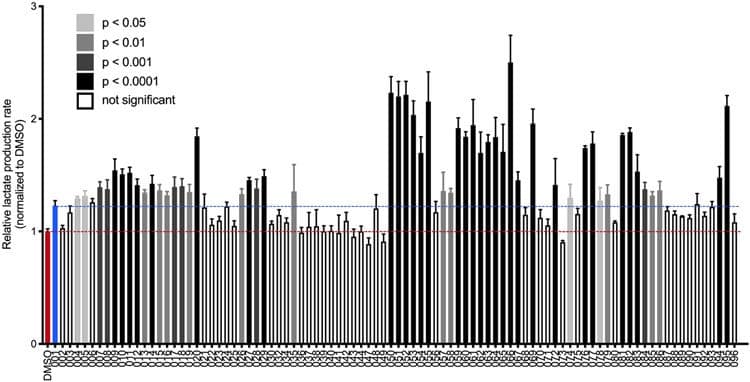
Lactate induction by all "JXL-xxx" compounds published by Pelage.
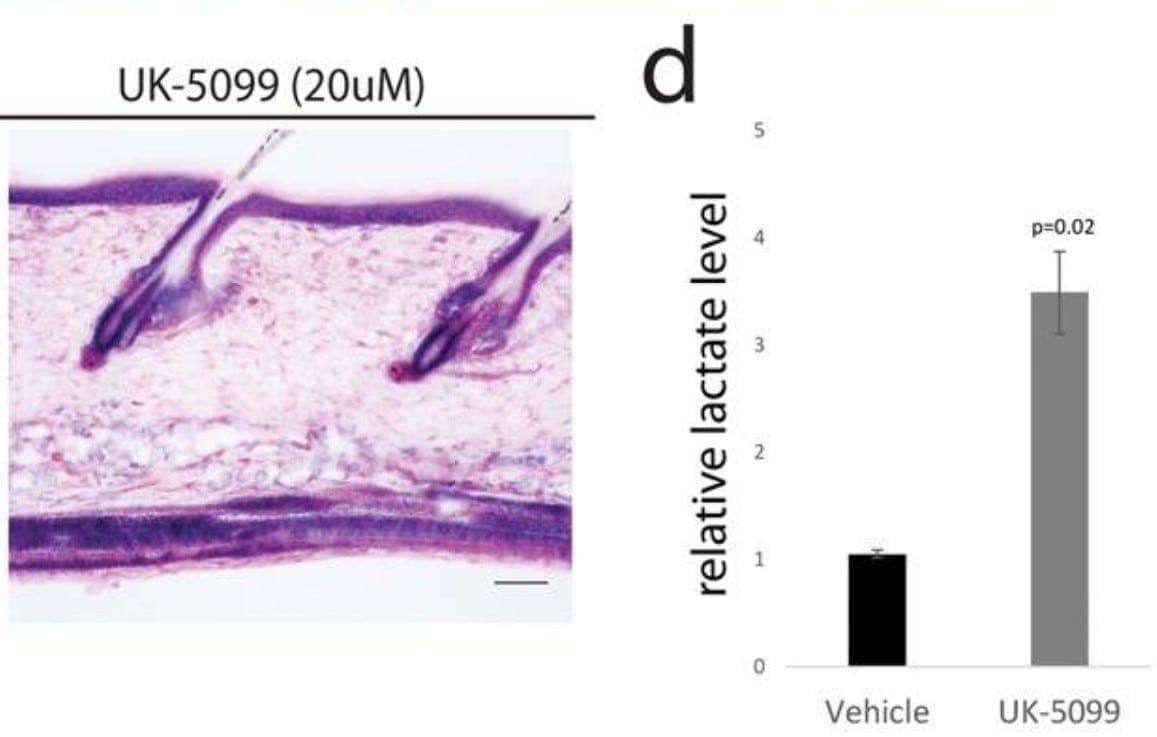
Lactate induction by MPC inhibitor UK-5099.
None of this proves PP405 does nothing. But it does mean the core mechanism is not new territory, and the previous explorers mostly came back empty-handed.
What about the arrector pili muscle theory?
- A popular idea holds that the arrector pili muscle (the tiny muscle that makes hair stand on end) detaches from the follicle in bald scalp, severing a nerve connection that helps activate stem cells, and that this detachment helps drive hair loss.
- The weight of the evidence points the other way: detachment looks like a consequence of hair loss, not a cause. Muscle attachment is governed by a Wnt-dependent gene (nephronectin); as Wnt signaling falls in a balding follicle, the anchor disappears and the muscle lets go. Knocking out the nerve-receptor pathway in mice only delays the hair cycle, it doesn't cause miniaturization. And plenty of follicles grow fine without this muscle at all, including transplanted follicles, lab-grown follicle organoids, and the famously dense fur of sea otters, which have no arrector pili muscle.

Sea otter.
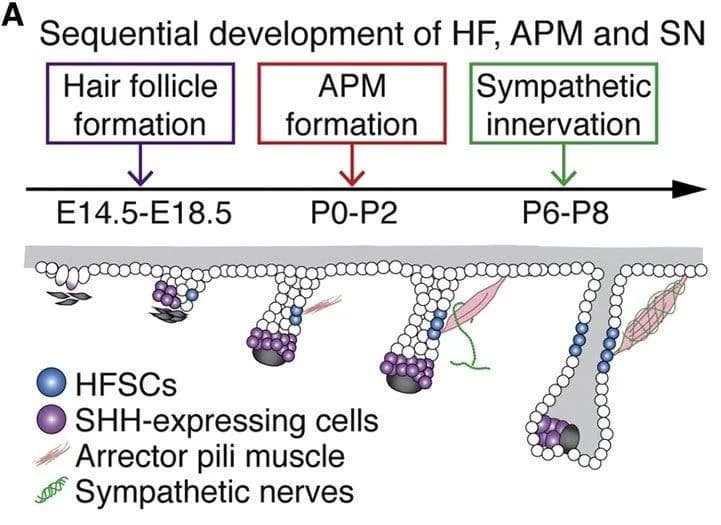
APM formation with establishment of sympathetic nerve innervation.
- In other words, this pathway seems to regulate the timing of the cycle, not the size of the hair, the same ceiling PP405 keeps running into.
The data that doesn't fit the story
In mice, you can spike follicle lactate and kick off a new growth phase through several routes — including activating STAT3 with a molecule called RCGD423, as in Pelage's own foundational work. The trouble starts when you move from mouse to human tissue.
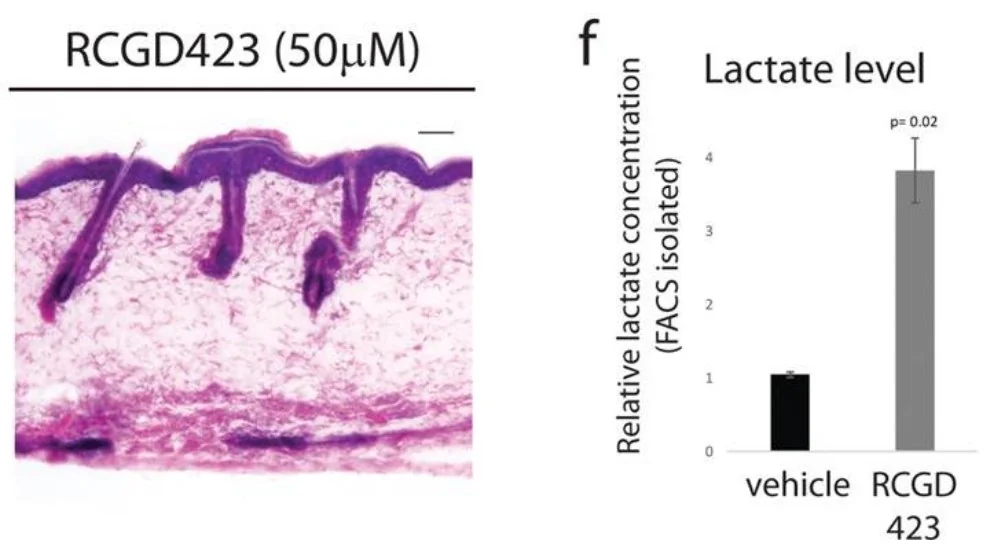
Lactate induction by STAT3 activation using RCGD423.
- Worse for the "more lactate = more hair" thesis: STAT3 is already overexpressed in balding follicles, which should already be driving extra lactate. If cranking up lactate were enough to reverse miniaturization, that endogenous overactivation should already be helping. It isn't.
- When researchers tested an MPC inhibitor (UK-5099) on human hair follicles outside the body, the result was the opposite of the mouse data: it caused cellular (ER) stress, inhibited Wnt signaling, and arrested the cell cycle in the very progenitor and matrix cells that build the hair. Pelage has suggested the dose may have been too high, but the inhibitory effect appeared at a lower concentration (10 μM) than the one used in the positive mouse studies (20 μM), which complicates that explanation.
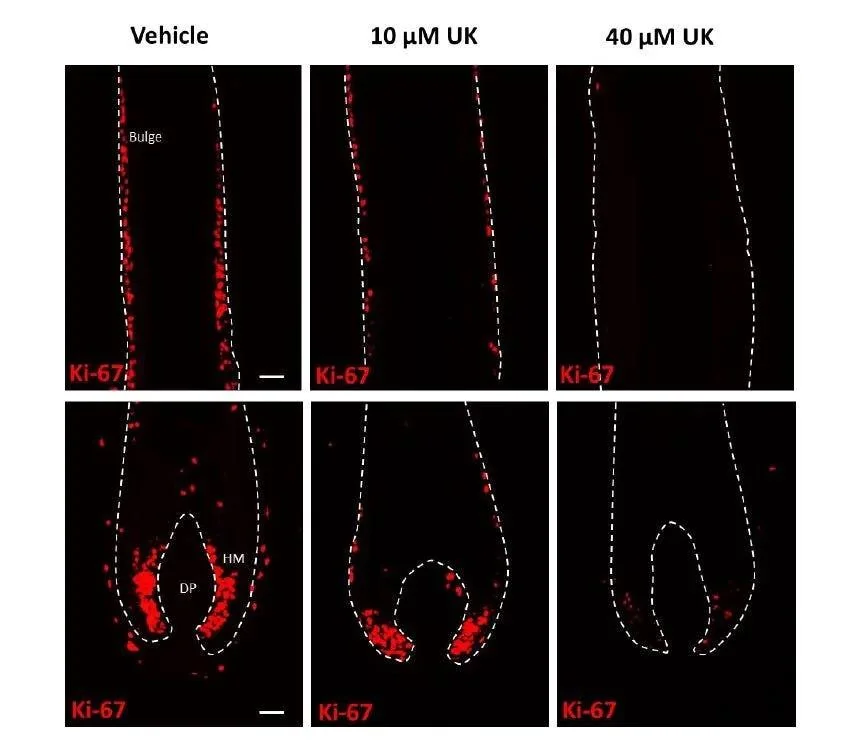
Proliferation of matrix and ORS cells in human hair follicles exposed to UK-5099 ex vivo.
- There's also a striking quote worth sitting with. One of the Pelage researchers told a reporter they had worried the drug might kill the follicles in the clinical trial, and were relieved it didn't. That's hard to square with simultaneously presenting it as a near-certain breakthrough. If the mechanism were as clean as the marketing suggests, that fear wouldn't have been on the table.
The deeper problem: the metabolism looks broken in the opposite direction
The closer you look at balding follicles, the more the metabolic story runs the wrong way for PP405.
- The dermal papilla runs on OXPHOS — and that's what's impaired. The DP, the hub that actually programs hair size, depends on oxidative phosphorylation, and that machinery is impaired in bald scalp (partly through ER stress that further dampens Wnt). Logically, restoring OXPHOS efficiency is a more promising target than forcing cells deeper into glycolysis.
- The bald dermal papilla is already too glycolytic. A recent analysis found that IRG1 (ACOD1) is downregulated in DP cells exposed to DHT and in DP cells from bald scalp. Knocking it down drives up senescence markers (p16, p21, p53), wrecks the TCA cycle, and pushes the cell toward more glycolysis. The diseased DP has already drifted in the glycolytic direction — PP405 would only nudge it further the same way.
- Reductive carboxylation and the acetyl-CoA trap. When mitochondria are impaired (or cells are hypoxic), they can run part of the TCA cycle backward — "reductive carboxylation" — burning through alpha-ketoglutarate to make acetyl-CoA. Excess acetyl-CoA favors proliferation over differentiation, and during the regression phase of the cycle it can push progenitor cells to revert back into stem cells. A follicle stuck making stem cells instead of hair-builders is exactly the AGA phenotype.
- The epigenetic lock. That same alpha-ketoglutarate is the required cofactor for the enzymes that strip methyl marks off histones — the "erase the slate" step that lets a resting stem cell commit to becoming a hair progenitor in the next cycle. Drain alpha-ketoglutarate (or let its competitor succinate rise) and those demethylases stall, leaving stem cells epigenetically locked out of differentiation. The alpha-ketoglutarate-to-succinate ratio is increasingly recognized as a switch for stem cell fate.
- TWIST1 actively blocks the fix. There's an uncoupling protein, UCP1, that could in principle reverse reductive carboxylation and restore alpha-ketoglutarate. But TWIST1 — ectopically switched on in the outer root sheath of balding follicles — represses UCP1. So the balding follicle appears to be running a program that suppresses the very metabolic correction that might help, which is the opposite of what forcing glycolysis does.
Put together, the most parsimonious reading is that pattern baldness looks closer to a mitochondrial-and-epigenetic failure than a glycolysis deficiency. That also reframes the one tantalizing human observation in this whole story (below).
Is there a long-term safety question?
- Possibly. A short, targeted burst of glycolysis in stem cells (as in the mouse knockouts) is very different from broadly and chronically forcing glycolysis across many cell types in a living follicle for months or years.
- In other tissues, forced glycolysis via MPC inhibition (UK-5099) has been shown to raise reactive oxygen species and reduce mitochondrial function even under normal oxygen. And in conditions like neurodegeneration, where cells lean on glycolysis to compensate for failing mitochondria, that compensation buys time but doesn't fix the underlying problem — and chronic glycolysis may even make mitochondrial dysfunction worse. The honest summary is that we don't yet know whether years of MPC inhibition is benign for the follicle, helpful, or quietly harmful (potentially via the integrated stress response).
Where might PP405 actually help?
In fairness, the picture isn't uniformly negative, and a few threads are worth watching.
- Women may respond differently. A proteomic analysis found a reduced glycolytic signature in follicles from women with female pattern hair loss, while men with AGA showed increased glycolysis. If that holds up — the study had a notable age gap between groups — a glycolysis-boosting drug could be a better metabolic match for women than for men.
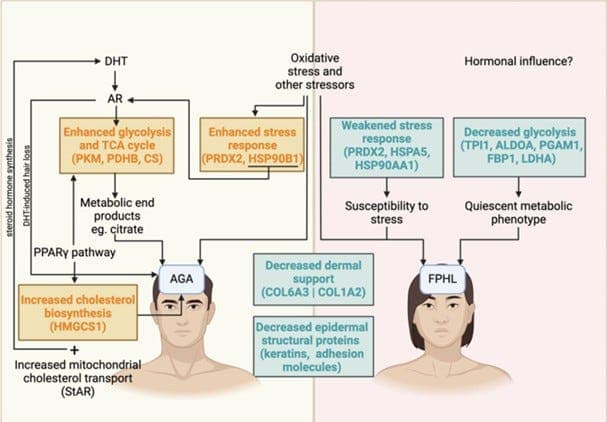
Pathway analysis of male and female pattern hair loss.
- An intriguing human case. A 44-year-old man treated with vorasidenib — an IDH1/2-inhibitor cancer drug that reshapes exactly the alpha-ketoglutarate metabolism described above — grew new hair on his previously bald scalp, with hypertrichosis and regrowth that kept increasing over at least five months. It's a single case, but it points at the metabolic/epigenetic axis rather than at glycolysis.
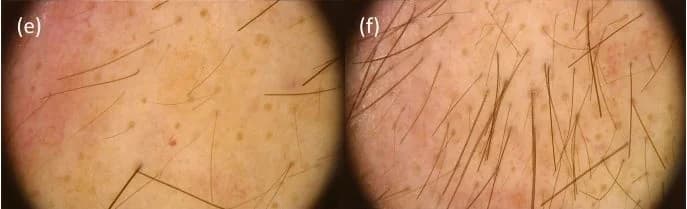
Bald scalp of a 44-year-old male after 5 months of treatment with vorasidenib.
- The dermal papilla wildcard. It's not impossible that MPC inhibition produces some helpful, indirect effect on the dermal papilla itself, or modestly dials down androgen-receptor activity. These are speculative, but they're the kind of unexpected effects that clinical trials exist to surface.
So what should you actually expect?
- The most likely outcome, based on the mechanism, is that PP405 prompts dormant follicles to start growing earlier than they otherwise would. That can modestly increase the number of visible hairs at any given moment, because fewer follicles are sitting idle in their resting phase.
- What's much harder to explain mechanistically is meaningful reversal of miniaturization, the part patients actually care about: turning thin, wispy hairs back into thick terminal ones. That outcome depends on rescuing the dermal papilla and Wnt signaling, and there's little reason to think waking up stem cells with lactate accomplishes it.
- This lines up with the cautious read after the AAD 2026 readout: the early imaging signals are genuinely interesting, but the gap between activation and durable terminal hair remains the central unanswered question. Until a properly powered trial shows sustained, cosmetically meaningful regrowth, not just earlier-arriving fuzz, that caution is warranted.
- The practical takeaway hasn't changed. If you're losing hair today, don't wait on PP405. Proven options like finasteride, dutasteride, and minoxidil have decades of evidence behind them and are available now. If Pelage's Phase 3 program defies the mechanistic skepticism and demonstrates real terminal regrowth, it would be the most exciting development in the field in years, and worth a hard second look.
The bottom line
The underlying science from the UCLA and Pelage teams is good science, and the discovery that glycolysis drives stem cell activation is a real contribution to hair biology. The leap that hasn't been earned is the one from "we can activate hair follicle stem cells" to "we can reverse pattern baldness." Those are different problems. Pattern hair loss is a differentiation-and-signaling failure rooted in a shrinking dermal papilla, and PP405 targets the part of the system that, in most balding follicles, was never broken. That's the central tension worth holding onto as the Phase 3 data arrives.
References
Full deep-dive (85+ citations): hairypapasmurf. PP405: The Good, the Bad and the Ugly. Medium, 2026. Medium
Anagen. PP405 for Hair Loss: What the AAD 2026 Data Actually Shows. Anagen Blog
Flores A, Lowry WE, et al. Lactate dehydrogenase activity drives hair follicle stem cell activation. Nat Cell Biol. 2017. PubMed
Kim CS, et al. Glutamine metabolism controls stem cell fate reversibility and long-term maintenance in the hair follicle. Cell Metab. 2020. Cell Metabolism
Pelage Pharmaceuticals. PP405 program overview and Phase 2a clinical trial (NCT06393452). 2024–2025.